
10% Throughput Gains, Without Disruption
How a Simple Add-On Delivered the Gains in Under a Month
March 2026

Most people wouldn’t expect this.
A simple accessory for a handheld scanner, improving throughput by 10% in just a few weeks?
Not without new software.
Not without workflow redesign.
Not without retraining an entire workforce.
And yet—that’s exactly what happened.
This isn’t a story about transformation through disruption. It’s a story about what happens when you remove friction from work that’s already happening—and what that unlocks over time.
"It's rare to see a solution fit this easily into what we're already doing and still deliver measurable results."
Dennis Warrick — Manager of Operations Analysis, Ingram Content Group
The Environment
Ingram Content Group runs one of the world's largest book and content distribution operations—and throughput there isn't just important, it's everything.
Every process was already tuned. The WMS was proven. The workflows were established. The associates knew exactly what they were doing. Like most well-run operations, there wasn’t much appetite for change—especially the kind that risks slowing things down before making them better.
So when the idea of introducing something new came up, the bar was high. It had to work within the existing system, not against it.
A Different Approach to Improvement
Instead of asking, “How do we change the workflow?” the team asked a different question:
What if the workflow stays exactly the same—but the experience of doing it improves?
That’s where Six15’s ST1 Bluetooth® HUD came in.
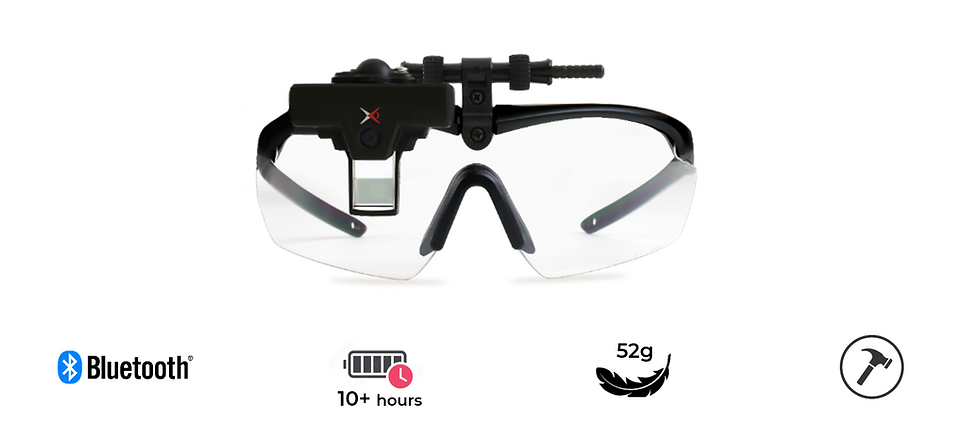
Rather than replacing devices or reworking systems, the HUD moved the instructions from the handheld screen into the associate's line of sight—so users could pick hands-free with a ring scanner.
Same system. Same workflow. Same work. Just a different way of interacting with it.

Some users found the display unfamiliar. A few called it uncomfortable at first. Others wondered whether it was helping at all, or just one more thing to manage.
That's how adoption usually goes.
Any time you introduce a new way of working—even a small one—there's a period where it feels like friction before it feels like progress.
What Changed
Around week four, the tone shifted.
The device stopped feeling like something extra and started feeling like part of the workflow. Movements became more natural. The constant back-and-forth between looking down at a device and back up to the task fell away.
Work started to flow.
Users who started out hesitant ended up preferring the hands-free experience—especially in manual and batch picking environments.
The Result
After the adjustment period, we tracked performance for several weeks.
Ingram's throughput rose by more than 10% across the team.
Not a short-term spike. Consistent and repeatable.
"We didn't change our systems or our workflow - we just changed how our team interacts with it. After a short adjustment period, the difference was clear. The hands-free approach made the work feel smoother, and the throughput gains followed. It's rare to see a solution fit this easily into what we're already doing and still deliver measurable results."
Dennis Warrick — Manager of Operations Analysis, Ingram Content Group
Why It Worked
Before, every step required a small reset: look down, read, process, move, scan, repeat.
After, those interruptions were gone. Instructions stayed in view. Hands stayed free. Movement became continuous instead of stop-and-go.
The workflow didn't change—but the experience did.
The Financial Reality
A 10% improvement adds up fast.
For a single associate on an 8-hour shift, that's roughly 0.8 hours back every day—more than $4,000 a year at the national average wage.
Scale that to a 30-user deployment and you're past $140,000 a year, with payback in about four months.
What This Actually Means
Most operations don't have a throughput problem. They have layers of small inefficiencies that compound over time—each one too minor to fix on its own, but together, expensive.
Nothing about removing them required a major decision.
No system overhaul.
No operational reset.
No disruption to the floor.
Just a small change in how the work feels—and a measurable result that followed.
Because if this kind of gain is possible without disruption—without retraining, without replatforming—it raises a different question:
Not whether it works.
But how long does it make sense to operate without it?
